
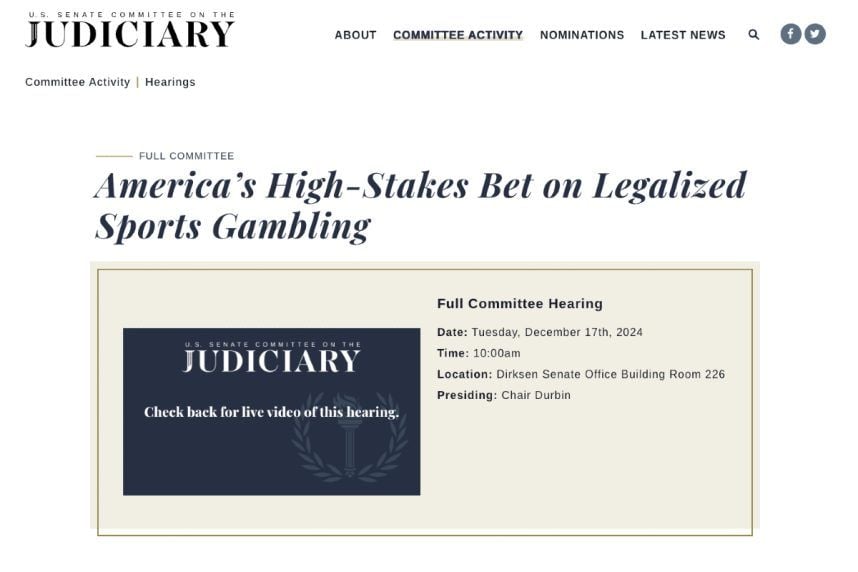
SAFE Bet Act Hearing Set: Federal Regulations on Sports Betting Loom
SAFE Bet Act Hearing Set: Federal Regulations on Sports Betting Loom
The SAFE Bet Act, a crucial piece of legislation introduced to Congress by House Representative Paul Tonko (D-NY) and Senator Richard Blumenthal (D-CT), is gearing up for a hearing on December 17, 2024. This bill aims to establish federal regulations within the burgeoning sports betting market to protect consumers effectively.

Overview of the SAFE Bet Act
The upcoming Senate Judiciary Committee hearing, led by Chairman Dick Durbin (D-IL), will delve into the proposed regulations and their potential implications for the industry, aptly titled “America’s High-Stakes Bet on Legalized Sports Gambling.”
The SAFE Bet Act, which stands for Supporting Affordability and Fairness with Every Bet Act, seeks to address the unprecedented proliferation of legalized sports betting across the United States, a shift that sponsors claim has adverse social implications.
Key Provisions of the Act
The legislation features several noteworthy regulations, including:
- A ban on sports betting advertisements on television and streaming platforms between 8 a.m. and 10 p.m.
- Prohibition of misleading marketing phrases such as “risk-free bets” and deposit bonuses.
- Restrictions on AI usage in tailoring incentives and promotions.
- Mandatory affordability checks for bettors.
- Cap on the number of deposits allowed per day to five, along with a ban on credit card transactions for online betting accounts.
Advocacy for the SAFE Bet Act
Representative Tonko has expressed concern about the overwhelming presence of sports betting advertisements in daily life, highlighting the need for congress to step in and implement protections. Senator Blumenthal reiterated that while the act does not aim to ban gambling itself, it intends to eliminate exploitative practices.
Industry Response
The strong gaming lobby, particularly the American Gaming Association (AGA), challenges the necessity of federal intervention, arguing that states have sufficiently developed regulatory frameworks. Chris Cylke, AGA’s Senior VP of Government Relations, stated that existing measures are tailored to the unique needs of each jurisdiction.
Legal Background
The Judiciary Committee’s jurisdiction encompasses a wide range of legislative matters, particularly those affecting social and constitutional rights. A significant ruling by the US Supreme Court in May 2018 abolished PASPA (Professional and Amateur Sports Protection Act), which had previously restricted single-game betting to Nevada.
This ruling clarified the Tenth Amendment rights, allowing states to legislate as they see fit regarding sports wagering.
Conclusion
The SAFE Bet Act represents a pivotal moment in the evolution of sports betting regulation in the United States. It highlights the ongoing debate over balancing consumer protections against the interests of an expanding and lucrative gaming industry.

